Common access problems for Clapham rubbish collections and fixes
Posted on 09/10/2026

If you have ever watched a rubbish collection turn into a bit of a scramble, you will know how quickly a simple job can become awkward. In Clapham, access issues are one of the most common reasons collections slow down, get delayed, or need a different approach altogether. This guide to common access problems for Clapham rubbish collections and fixes breaks down what usually goes wrong, why it matters, and what you can do about it without turning the day into a hassle.
Maybe the van cannot get close enough. Maybe a flat is up three flights of stairs and the lift has other ideas. Maybe parking is tight, the front gate is locked, or a sofa simply will not fit through the hallway. Whatever the snag, there is usually a practical fix. And truth be told, once you know the likely access pinch points, you can save time, reduce cost, and avoid that sinking feeling when the crew arrives and the plan falls apart.
This article is for homeowners, tenants, landlords, managing agents, tradespeople, and anyone arranging waste removal in SW4. It covers the typical access headaches, how professionals handle them, and how to prepare properly so collections run smoothly first time.
Expert summary: Most access problems are not caused by the waste itself. They happen because the property layout, parking, timing, or communication has not been planned well enough. The fix is usually simple: confirm access early, measure the item, clear routes, and match the collection method to the property.
Why Common access problems for Clapham rubbish collections and fixes Matters
Access might sound like a small detail, but in rubbish collection it often decides whether the job is efficient or messy. In Clapham, where you have a mix of terraces, mansion blocks, converted flats, basement properties, mews-style side entrances, and busy roads, access can be the difference between a smooth pickup and a frustrating return visit.
Why does this matter so much? Because every access issue creates knock-on effects. The team may need extra time to carry items further. They may need more labour. They may need a different vehicle size. In some cases, the collection cannot safely proceed until the issue is sorted. Nobody wants a bulky wardrobe balanced awkwardly on a narrow staircase at 8.30 in the morning. Not ideal, to put it mildly.
For residents, poor access often means delays, extra charges, or items being left behind. For landlords and property managers, it can create complaints from tenants and unnecessary admin. For trades and refurb teams, one blocked access route can throw off the whole schedule. The practical lesson is simple: if you sort access early, everything else gets easier.
How Common access problems for Clapham rubbish collections and fixes Works
At a basic level, rubbish collection depends on three things: getting to the property, reaching the waste, and removing it safely. When access is difficult, the collection provider has to work around the issue rather than through it. That means planning around parking, entry points, stairs, lift use, load distance, item size, and timing restrictions.
In Clapham, that can look like a van having to park further down the road, a crew carrying bags through a shared hallway, or a sofa needing to be dismantled before it can leave the building. Sometimes there is a concierge or building manager to help. Sometimes there is not. Sometimes the front door code changes at the last minute. We have all seen that sort of thing. One missing code and the whole morning slows down.
The main access problems usually fall into a few broad categories:
- Vehicle access problems such as narrow roads, resident-only parking, loading restrictions, or blocked driveways.
- Internal access problems such as stair-only buildings, tiny lifts, tight corners, low ceilings, and narrow doorways.
- Entry and permission issues such as locked gates, missing keys, access codes, or no one being available to let the crew in.
- Item handling issues such as oversized furniture, heavy appliances, awkward shapes, or breakable materials.
- Timing and communication issues such as restricted collection windows, missed calls, or unclear instructions.
Fixing access usually means removing uncertainty before the crew arrives. That can be as simple as sending photos, sharing measurements, confirming the parking arrangement, or choosing a service that is set up for difficult removals. If you need a broader overview of what the company actually handles, the services overview is a useful place to start.
Typical access fixes in plain English
If a collection is delayed because the van cannot stop nearby, the fix may be to arrange a short carry distance and a smaller vehicle. If a wardrobe will not fit around the corner, it may need dismantling. If a basement flat has no lift, the solution is more labour and a clearer route. In practice, the answer is rarely dramatic. It is usually a combination of preparation and the right method.
Key Benefits and Practical Advantages
Sorting access problems before collection day is not just about convenience. It has real practical benefits, and those are worth spelling out because people often underestimate them.
- Fewer delays: If the crew knows exactly where to park and how to enter, they can get on with the job.
- Lower chance of extra charges: Surprises tend to cost more than planned work.
- Less disruption to neighbours: Better planning means less time on communal landings, pavements, and shared entrances.
- Safer lifting and carrying: A clear route reduces the risk of trip hazards and awkward handling.
- Better fit for the property: The right service can be matched to the building instead of forcing a one-size-fits-all approach.
- Less stress for you: Let's face it, nobody enjoys standing outside with a heavy chest of drawers while trying to phone someone for an access code.
There is also a quieter benefit: confidence. Once you know the access plan is solid, the collection becomes a routine task rather than a logistical headache. That matters for busy households, landlords between tenancies, and small businesses trying to clear stock or office waste without interrupting the day.
For jobs involving bulky items, the furniture disposal in Clapham page can help when the access issue is tied to sofas, beds, wardrobes, or other large pieces.
Who This Is For and When It Makes Sense
This topic matters to almost anyone arranging collection in a built-up area, but it is especially relevant if your property has one or more of the following:
- a narrow hallway or staircase
- no lift, or a lift that is too small for larger items
- communal entrances with security access
- restricted parking outside the building
- rear access only through an alley, courtyard, or garden path
- basement, top-floor, or split-level rooms
- hard-to-move waste from a garden, garage, loft, or office
It also makes sense if you are clearing waste after a move, a refurb, a tenancy change, or a room reorganisation. That is when access issues often catch people out. The item looked easy enough in the room. Then you try to turn it in the stairwell and realise, well, it was a bit optimistic.
If you are dealing with a larger clear-out, you may also find the specialist pages for house clearance in Clapham or garage clearance in Clapham useful, especially where multiple access points and mixed waste types are involved.
Step-by-Step Guidance
Here is a practical way to handle common access problems without overcomplicating the process.
1. Walk the route before collection day
Start at the road, not at the item. Walk the exact route the crew would take: where they park, how they enter, what doors or gates they use, and where any tight spots are. Check whether bins, bikes, prams, or planters are blocking the way. You would be surprised how often a simple hallway tidy-up solves half the problem.
2. Measure the item and the narrowest points
Measure the height, width, and depth of the item. Then measure doorways, stair turns, lifts, and any awkward corners. The narrowest point is the one that matters, not the widest. A sofa may be fine in the room but impossible at the landing. That mismatch is one of the most common causes of failed collections.
3. Confirm parking and loading access
Find out where the vehicle can legally stop. In Clapham, parking pressure can be part of everyday life, especially on busier roads or at certain times of day. If loading bay access is needed, confirm the rules in advance. If the driver has to circle the block twice because of unclear instructions, time disappears fast.
4. Share photos of the property and waste
Photos are often more useful than a long description. Take one of the item, one of the entrance, one of the stairs or lift, and one of the parking spot if relevant. Try to show the actual problem, not just the nice angle. Nobody needs art photography here.
5. Check whether items need dismantling
Some large items are safer and easier to remove if partially dismantled. Beds, wardrobes, desks, and shelving units can often be broken down into manageable sections. Do this only if it is safe and practical. If the item includes glass, wiring, or heavy fixtures, it may be better left to the collection team.
6. Agree who provides access
If a key, fob, code, or concierge sign-in is needed, decide in advance who is responsible for opening doors. Do not assume someone else has done it. That is how people end up standing in a stairwell phoning three different numbers at once.
7. Match the service to the access level
For straightforward jobs, a standard collection may be enough. For more awkward properties, a service that handles heavier lifting, tight access, or same-day response is usually a better fit. If you need a faster turnaround, the junk removal service in Clapham and rubbish collection in Clapham pages can be useful references.
Expert Tips for Better Results
In our experience, the best access fixes are the boring ones. Clear, specific, unglamorous. They work.
- Send exact instructions, not vague ones. "Front door to the left of the blue bins, then second floor by stairs only" is far better than "easy access".
- Leave the route clear the night before. A quick tidy of the hallway or driveway can save ten minutes of awkward shifting.
- Use photos for anything complex. One good photo can replace a paragraph of back-and-forth.
- Be honest about the building. If the lift is tiny, say so. If the parking is awful, say so. No judgment. It just helps planning.
- Allow extra time on busy streets. Clapham can be lively, especially around peak times. A realistic window reduces stress.
- Think in terms of carry distance. If the vehicle cannot park right outside, tell the provider roughly how far the team will need to carry items.
One small habit makes a big difference: label what is going, what is staying, and what should never be touched. A bit of tape on the floor or a simple note on a door can save a lot of confusion.
If the job includes outdoor waste, you may also find the garden waste removal in Clapham page helpful for handling bags, cuttings, soil, and awkward access through side paths or rear gates.

Common Mistakes to Avoid
Most access problems are preventable. The trouble is, people often realise that after the van has arrived.
Assuming the item will fit
This is the classic one. A measured-looking sofa or wardrobe can still fail at the final turn. If it has to twist, tilt, or be carried downstairs, the route matters more than the item itself.
Forgetting about communal rules
Shared buildings often have their own access expectations: lift bookings, concierge check-ins, quiet hours, or restrictions on where waste can be left. Ignoring those rules can create complaints even if the collection itself is fine.
Not checking parking in advance
"There's usually space" is not a plan. It is a hope. Parking pressure in London has a way of exposing hope pretty quickly.
Leaving access instructions until collection day
Last-minute messages are risky. If the driver is already on the way, there may not be enough time to adjust the route, crew size, or vehicle type.
Underestimating how much carrying is involved
Many people focus on the item and forget the route from the room to the vehicle. Stairs, corners, wet paving, and front steps all matter.
Not separating fragile or hazardous items
When waste includes sharp, heavy, or awkward materials, access becomes a safety issue as well as a logistics issue. If in doubt, flag it early rather than burying the detail in a long message nobody quite reads properly.
Tools, Resources and Recommendations
You do not need fancy equipment to solve most access issues. A few basic tools and a bit of preparation go a long way.
- Measuring tape: for doors, furniture, stair turns, and lift dimensions.
- Phone camera: for clear photos of access points and items.
- Sticky notes or labels: to mark what is being removed.
- Basic screwdriver or Allen key set: for simple dismantling where safe.
- Gloves and sturdy footwear: useful if you are helping to move items before collection.
- Notepad: old-fashioned, but handy for codes, names, arrival times, and gate instructions.
For related service decisions, you may also want to compare waste removal in Clapham, rubbish clearance in Clapham, and skip hire in Clapham. Each can suit a different access situation. A skip may work well for an easy frontage, while a man-and-van style clearance often suits tight access or upper-floor properties better.
If pricing is part of your decision, the pricing and quotes page can help you think about what affects cost, especially when access adds time or labour. For peace of mind on the operational side, the insurance and safety page is worth a look too.
Law, Compliance, Standards, or Best Practice
Access planning is not only about convenience. There are also safety and responsibility angles to consider. In the UK, waste should be handled in a way that avoids danger to workers, residents, visitors, and the public. That means keeping walkways clear, not blocking fire exits, and not forcing unsafe lifting through cramped or obstructed routes.
If the collection is happening in a shared building, best practice usually means communicating with the landlord, managing agent, or concierge where needed. For businesses, the duty of care around waste also means making sure the chosen disposal method is suitable for the items and the site. That is especially important if the waste includes mixed materials, broken fittings, or items that might need special handling.
There is no one-size-fits-all legal rule for every access problem, but there are clear common-sense standards: do not create hazards, do not block communal areas longer than necessary, and do not ask crews to take risks they should not reasonably take. If access is poor enough to make lifting unsafe, a different method or extra preparation is the right answer.
For Clapham properties, especially flats and converted houses, the practical best practice is to plan access as carefully as the waste itself. That may sound obvious, yet it is the bit people skip when they are in a hurry.
Options, Methods, or Comparison Table
Different access problems call for different solutions. Here is a simple comparison to make the choices clearer.
| Situation | Best-fit option | Why it works | Watch out for |
|---|---|---|---|
| Narrow stairwell in a flat | Man-and-van style clearance | Items can be carried out manually in smaller loads | Extra labour may be needed for heavy items |
| Easy driveway access | Skip hire | Good for ongoing DIY or renovation waste | Needs legal space for placement and loading |
| Bulky furniture in a top-floor property | Specialist furniture removal | Safer handling and dismantling if needed | Measure doorways and stair turns first |
| Mixed household clear-out | House clearance | Useful when there are many items and access needs coordinating | Communal access and parking should be confirmed early |
| Garden waste through side access | Targeted garden clearance | Good for bags, branches, and outdoor debris | Rear gate width and path condition matter |
If your property has awkward access but you still need a full clear-out, a service like house clearance in Clapham or builders waste clearance in Clapham may be the more practical choice than a basic pickup. For renovation jobs, that difference really matters.
Case Study or Real-World Example
Here is a realistic example from a typical Clapham-style property. A resident in a converted flat needed a large wardrobe removed after a bedroom refit. The item looked manageable in the room, but the building had a tight staircase, a turn halfway down, and a shared entrance that could only be opened with a fob. On top of that, parking outside was limited to a short loading zone.
The first instinct was to try to remove the wardrobe in one piece. That quickly became awkward. Rather than forcing it, the better approach was to stop, measure the route properly, and dismantle the unit into sections. The resident also sent a couple of photos of the stairwell and front entrance, which made it clear where the tricky corners were. The collection team could then plan the carry route, bring the right tools, and allow a little extra time for the loading distance.
The result? No damaged walls, no blocked entrance, and no last-minute panic. The job still took effort, of course. But because the access issues were identified early, it stayed manageable. That is the pattern you see again and again. Most "difficult" collections become straightforward once the access details are properly understood.
A similar approach helps with larger mixed removals too, especially when using a service such as loft clearance in Clapham or office clearance in Clapham, where stairs, narrow passages, and shared building rules can easily trip things up.
Practical Checklist
Use this before your collection day. It saves headaches. Honestly, it does.
- Confirm the collection date and arrival window.
- Check where the vehicle can legally park.
- Measure doors, stair turns, lifts, and the largest item.
- Take photos of the access route.
- Confirm keys, codes, fobs, or concierge procedures.
- Clear hallways, steps, and driveways if you can do so safely.
- Separate items that need dismantling from items that can be lifted as they are.
- Tell the provider about any low ceilings, tight corners, or basement access.
- Make sure pets, prams, and bins are out of the way.
- Keep a phone handy in case the crew needs clarification.
Quick tip: If you are not sure whether access is "good enough", assume it may be trickier than you think and describe it in detail. A clear warning now is much better than an awkward surprise on the day.
Conclusion
Common access problems for Clapham rubbish collections and fixes are usually less about the rubbish and more about the route, the timing, and the building itself. Once you think in terms of parking, carry distance, door widths, stairs, lift size, and access permissions, the whole process becomes much easier to manage.
The good news is that most access issues have a practical solution. Measure early, share photos, clear the route, and choose a collection method that fits the property rather than fighting against it. That is the real trick. Simple, but not always obvious when you are busy.
If you want to avoid delays and make the collection as smooth as possible, take a few minutes now to plan the access properly. Future-you will be grateful, and frankly, so will the people carrying the sofa down the stairs.
Get a free quote today and see how much you can save.
When access is planned well, the whole day feels lighter. That's the bit worth aiming for.


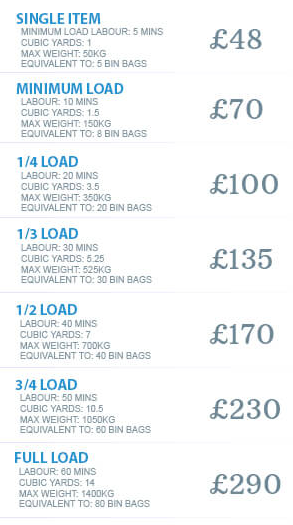
 Tipper Van - Rubbish Removal and Garden Waste Disposal Prices in Clapham, SW4
 Luton Van - Rubbish Removal and Garden Waste Disposal Prices in Clapham, SW4